Planning a trip once involved hours of research, multiple phone calls and manually comparing hotels, transport options and tour packages. Today, digital platforms can help travelers explore destinations, compare options and organize parts of their journeys more efficiently.
Artificial intelligence is helping accelerate this transformation.
AI in the travel industry refers to technologies that use methods such as machine learning, natural language processing, recommendation systems and predictive analytics to support travel-related tasks. These technologies can help travel companies understand customer preferences, automate routine work and make information easier to access.
From virtual travel assistants to demand forecasting and personalized recommendations, AI is creating new opportunities for travel agencies, tour operators, airlines and hospitality businesses.
However, AI is not a replacement for every human interaction. Travel decisions often involve personal preferences, unexpected changes and complex situations that require judgment and reliable human support.
In this guide, we explore ten practical ways AI is changing travel, the benefits and limitations of these applications, and how travel businesses can begin adopting them responsibly.
What Is AI in the Travel Industry?
AI in travel involves using intelligent software to analyze information, recognize patterns, generate responses or recommend actions that support travelers and travel businesses.
For example, a travel website might recommend destinations based on a visitor's stated interests. A customer support assistant could answer routine questions about tour inclusions, while a forecasting system could help a hotel estimate future demand.
Common technologies include:
Machine learning: Identifies patterns in data to support predictions and recommendations.
Natural language processing: Helps software interpret and respond to human language.
Generative AI: Produces text, itineraries, summaries and other content based on instructions and available context.
Predictive analytics: Uses historical and current data to estimate likely future outcomes.
Computer vision: Analyzes images and visual information for specific applications.
These technologies can be used individually or combined within a travel platform. Their usefulness depends on data quality, integration, implementation and human oversight.
10 Ways AI Is Transforming the Travel Industry
1. Personalized Travel Recommendations
Every traveler has different preferences. Some want cultural experiences and historic monuments, while others prefer adventure activities, beaches, wildlife or luxury accommodation.
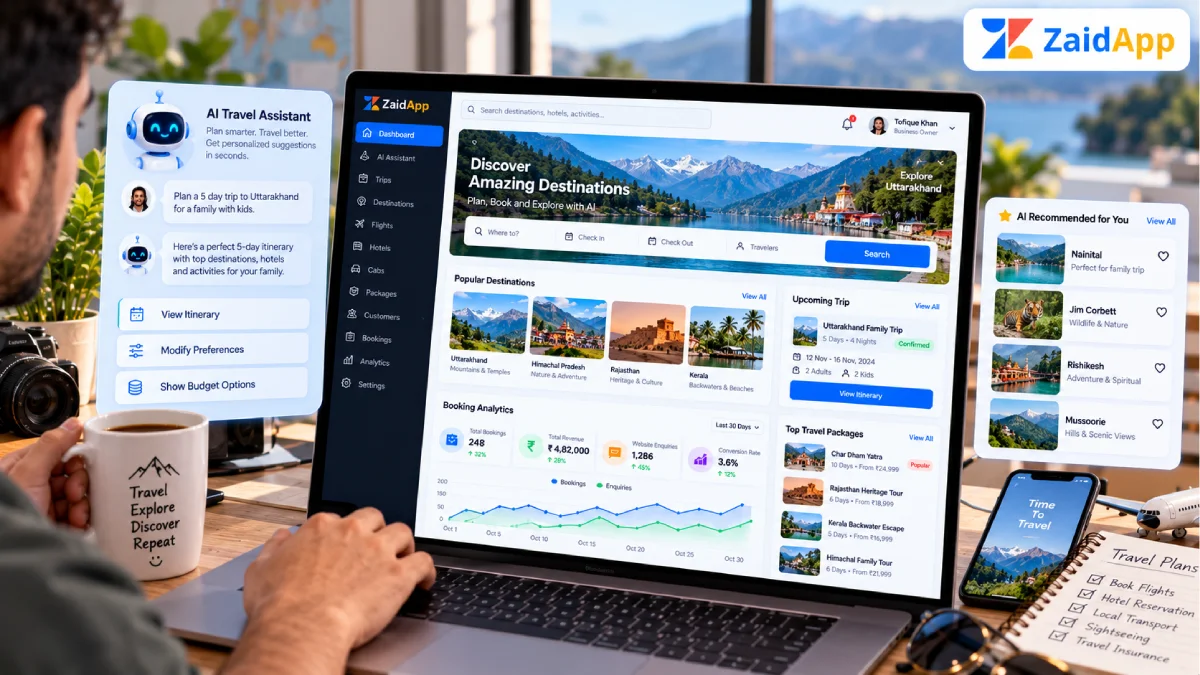
AI-powered recommendation systems can use information such as stated interests, destination preferences, budgets and previous interactions to suggest relevant options.
For example, someone planning a family holiday to Rajasthan might receive suggestions for Jaipur's heritage attractions, Jaisalmer's desert experiences and family-friendly accommodation.
A travel platform can use these recommendations to help visitors discover suitable packages more easily.
How travel businesses can use it:
Recommend destinations based on customer preferences.
Suggest relevant activities and attractions.
Personalize package suggestions.
Display related tours based on browsing behavior, where appropriate.
Help customers narrow down options before contacting an agent.
Personalization should remain transparent and respect privacy. Recommendations should not be presented as objectively best when they are based on limited information.
2. AI-Powered Travel Planning
Creating an itinerary involves balancing travel time, opening hours, budgets, interests and transportation options.
Generative AI can help travelers create an initial itinerary from a natural-language request.
For example, a traveler might ask for a five-day Rajasthan trip covering Jaipur, Jodhpur and Udaipur within a specified budget. An AI assistant could suggest a draft route, activities and a day-by-day structure.
Travelers and agents can then refine the itinerary based on real availability, transportation schedules and personal requirements.
Potential applications include:
Drafting day-by-day itineraries.
Suggesting activities based on interests.
Organizing destination information.
Creating alternative plans for different budgets.
Summarizing travel requirements and preparation lists.
AI-generated plans must be checked before booking. Travel times, opening hours, prices, visa rules and availability can change, and a generated itinerary may contain incorrect information.
3. 24/7 Customer Support With AI Chatbots
Travelers often need information outside normal business hours. They may want to know about package inclusions, pickup locations, cancellation policies or the documents required for a trip.
AI-powered chatbots can answer common questions using approved business information and guide customers toward relevant pages or enquiry forms.
For a tour operator, an assistant might answer questions such as:
What is included in this tour package?
How many days does the itinerary cover?
Is airport pickup available?
How can I request a customized package?
What information is needed to receive a quotation?
An effective chatbot should identify when it cannot answer confidently and provide a clear path to a human agent.
Business benefit: Travel teams can reduce repetitive support work while making basic information more accessible.
Chatbots should not invent package details, promise unconfirmed bookings or provide unverified travel regulations.
4. Dynamic Pricing and Demand Forecasting
Travel demand changes with seasons, holidays, major events, weather and destination popularity.
AI-based forecasting systems can analyze historical booking patterns and other relevant data to help businesses estimate future demand.
Hotels, airlines and tour operators may use forecasting tools to support decisions about pricing, inventory and staffing.
For example, a travel agency could examine previous enquiry and booking trends around a holiday period to prepare suitable tour packages and allocate sales resources.
Potential uses include:
Forecasting booking demand.
Identifying seasonal patterns.
Supporting inventory planning.
Estimating staffing requirements.
Evaluating pricing scenarios.
AI does not automatically produce optimal prices. Forecast quality depends on the data and assumptions used, and pricing decisions should consider fairness, transparency, customer expectations and applicable regulations.
5. Automated Enquiry Management for Travel Agencies
Travel agencies frequently receive enquiries through website forms, email, messaging platforms and telephone calls. Managing these enquiries manually can lead to delays, missed follow-ups and inconsistent records.
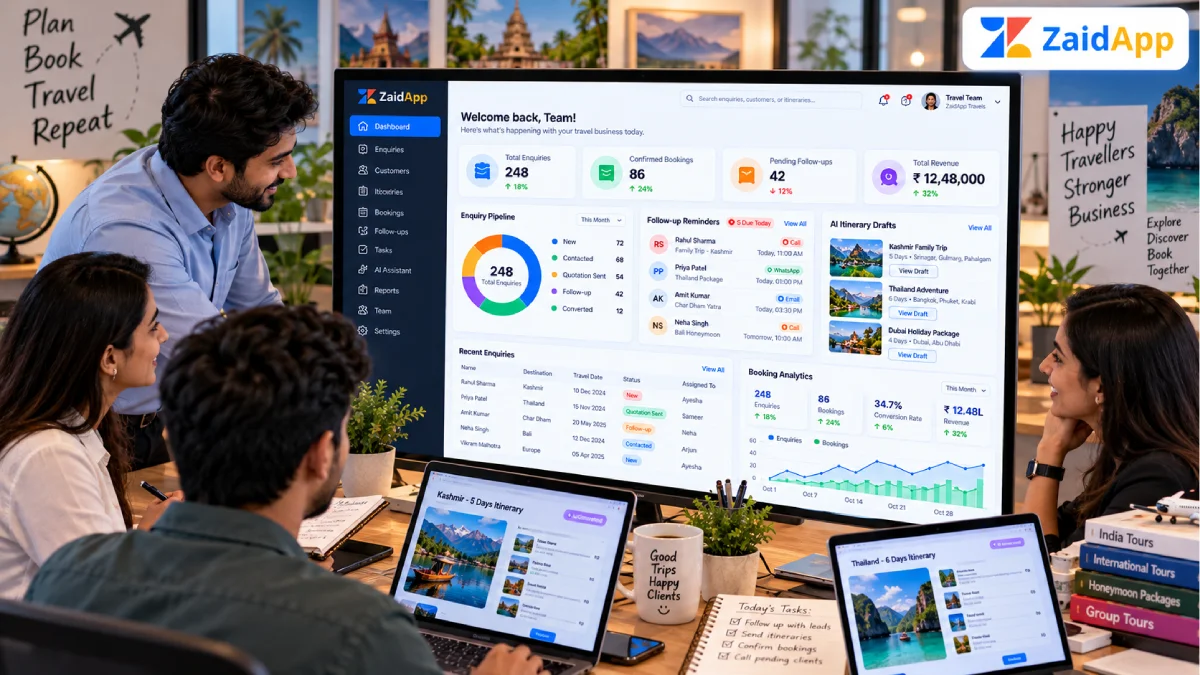
AI-assisted automation can help organize incoming enquiries, extract key details and prepare information for sales teams.
For example, a customer may submit a request for a seven-day family tour with a budget and preferred departure date. An automation workflow could record the enquiry, identify the requested destination and assign it to the appropriate team member.
Possible applications include:
Categorizing incoming enquiries.
Extracting destination, travel dates and group size.
Creating draft replies for agent approval.
Assigning leads to sales representatives.
Sending approved follow-up reminders.
Summarizing previous customer conversations.
For reliable operation, integrate the workflow with a suitable CRM or enquiry management system and define clear rules for errors, consent, data retention and human review.
Explore: ZaidApp's guide to digital tools for travel agencies.
6. AI for Hotel and Accommodation Operations
Hotels handle many recurring tasks, including guest enquiries, room-demand forecasting, review analysis and operational planning.
AI applications can support these activities when they have access to appropriate data and clearly defined responsibilities.
Examples include:
Answering common questions about hotel facilities.
Summarizing recurring themes in guest feedback.
Forecasting room demand.
Supporting housekeeping schedules.
Helping staff find relevant information from internal documentation.
Some hotels also use automated systems for guest communication before arrival or after departure.
These systems should protect guest information and provide human assistance for complaints, accessibility requirements, special requests and other situations that need careful judgment.
7. Smarter Destination Discovery
Travelers often discover destinations through photos, videos, blogs and recommendations. AI can help travel platforms organize this information and make discovery more relevant to individual interests.
For example, a visitor interested in history could be shown destination guides about forts, museums and heritage neighborhoods. An adventure traveler might receive information about trekking, wildlife or outdoor activities.
AI can also help businesses categorize destination content, generate draft summaries and improve website search experiences.
However, destination information must remain accurate and useful. Content should be reviewed for factual errors, cultural sensitivity, outdated details and misleading descriptions.
For immersive destination experiences, explore how AR and VR are creating new travel experiences.
8. Sentiment Analysis and Review Insights
Customer reviews can reveal what travelers appreciate and where a business needs to improve.
AI-powered text analysis can help organize large volumes of feedback into recurring themes, such as accommodation quality, transport arrangements, itinerary planning or customer support.
A tour operator could review feedback from multiple trips to identify recurring complaints about pickup delays or unclear inclusions.
Useful applications include:
Grouping reviews by topic.
Summarizing common compliments and complaints.
Identifying recurring service issues.
Comparing feedback across destinations or packages.
Helping teams prioritize service improvements.
Sentiment analysis can misinterpret sarcasm, context, language differences or mixed feedback. Businesses should review representative comments and avoid treating automated sentiment scores as definitive judgments.
9. Translation and Multilingual Travel Assistance
Travel businesses often serve customers who speak different languages. AI-assisted translation can help make destination information, itinerary drafts and routine support messages accessible to a broader audience.
Potential uses include:
Translating website content for international visitors.
Drafting multilingual customer support responses.
Summarizing destination information in different languages.
Helping agents prepare customer communications.
Supporting basic conversational assistance.
Translation quality varies by language, subject and context. Important information about safety, legal requirements, health, visas, insurance and booking terms should be reviewed by a qualified person when accuracy is critical.
Businesses should also preserve local place names and cultural meaning rather than relying on unreviewed automated translations.
10. Predictive Maintenance and Travel Operations
AI can support operational planning in transportation and hospitality when connected to relevant equipment or operational data.
For example, systems can analyze sensor readings, maintenance histories and usage patterns to identify possible signs of equipment problems.
Potential applications include:
Detecting unusual equipment behavior.
Estimating maintenance needs.
Identifying patterns associated with service disruptions.
Supporting fleet maintenance planning.
Improving resource allocation.
These applications require appropriate data, validated models and clear procedures. Predictions should support qualified maintenance staff rather than replace required inspections or safety protocols.
Benefits of AI for Travel Businesses
AI can create value when it addresses a real business problem rather than being added simply because it is a popular technology.
Faster Routine Workflows
Automation can help reduce repetitive tasks such as sorting enquiries, preparing draft responses and organizing customer information.
More Relevant Customer Experiences
Recommendation systems can help travelers find options that better match their stated preferences and trip requirements.
Better Access to Information
Conversational interfaces can make approved travel information easier to search and understand.
Data-Informed Planning
Forecasting and analytics can help businesses identify demand patterns and plan staffing, inventory or marketing activities.
Support for Business Growth
Automation may help a travel company manage more enquiries without increasing every manual task at the same rate. Actual results depend on implementation quality, customer volume and staff workflows.
Challenges of Using AI in Travel
AI also introduces risks that travel businesses should plan for.
Inaccurate Information
AI-generated content can contain incorrect prices, opening hours, travel rules or itinerary details. Verify time-sensitive information before presenting it as fact.
Customer Privacy
Travel enquiries can contain names, contact details, dates, budgets and other personal information. Collect only what is needed, apply suitable access controls and review the data practices of AI providers.
Integration Complexity
AI tools may need to connect with booking systems, CRM platforms, websites, email or messaging services. Poor integration can produce duplicate records, incomplete updates or incorrect customer communications.
Over-Automation
Not every situation should be handled automatically. Booking disputes, cancellations, urgent travel changes and complex customer complaints may require human intervention.
Cost and Return on Investment
AI tools can introduce subscription, integration, usage and maintenance costs. Start with a specific use case and measure whether it improves a meaningful business outcome.
How Travel Businesses Can Get Started With AI
Travel companies do not need to automate every process at once. A focused approach makes it easier to evaluate results and control risks.
Step 1: Identify One Repetitive Problem
Choose a task that consumes time or creates a clear customer-service problem, such as answering frequently asked questions or organizing incoming enquiries.
Step 2: Review Your Existing Data
Confirm that your package information, pricing, destination details and internal processes are accurate and up to date.
Step 3: Choose a Suitable Tool
Compare available AI and automation tools based on their capabilities, privacy controls, integration options, pricing and reliability.
Step 4: Define Human Approval Rules
Decide which actions can be automated and which require approval. For example, a system may prepare a quotation draft, but a travel agent should verify the final price and availability before sending it.
Step 5: Run a Small Pilot
Test the workflow with a limited number of enquiries or a small team. Record errors, time savings, customer feedback and operating costs.
Step 6: Measure the Results
Useful metrics may include response time, lead follow-up rate, enquiry-to-booking conversion, staff workload and customer satisfaction. Compare results with a clear baseline.
Step 7: Improve Before Expanding
Fix recurring problems, update information sources and train staff before rolling out the workflow more broadly.
Conclusion
AI is creating new opportunities across the travel industry, from personalized recommendations and itinerary preparation to customer support, demand forecasting and enquiry management.
For travel agencies, tour operators, hotels and travel technology businesses, the most useful applications are those that solve specific customer or operational problems. Successful adoption requires accurate information, privacy safeguards, suitable integrations and human oversight.
Start with one practical workflow, measure its results and improve it before expanding. By combining AI capabilities with reliable travel expertise, businesses can work toward more efficient operations and better customer experiences.
Planning a modern travel website or digital travel platform? Explore ZaidApp's travel website development services to learn about building a website aligned with your travel business requirements.


Comments
No comments yet. Be the first to comment!