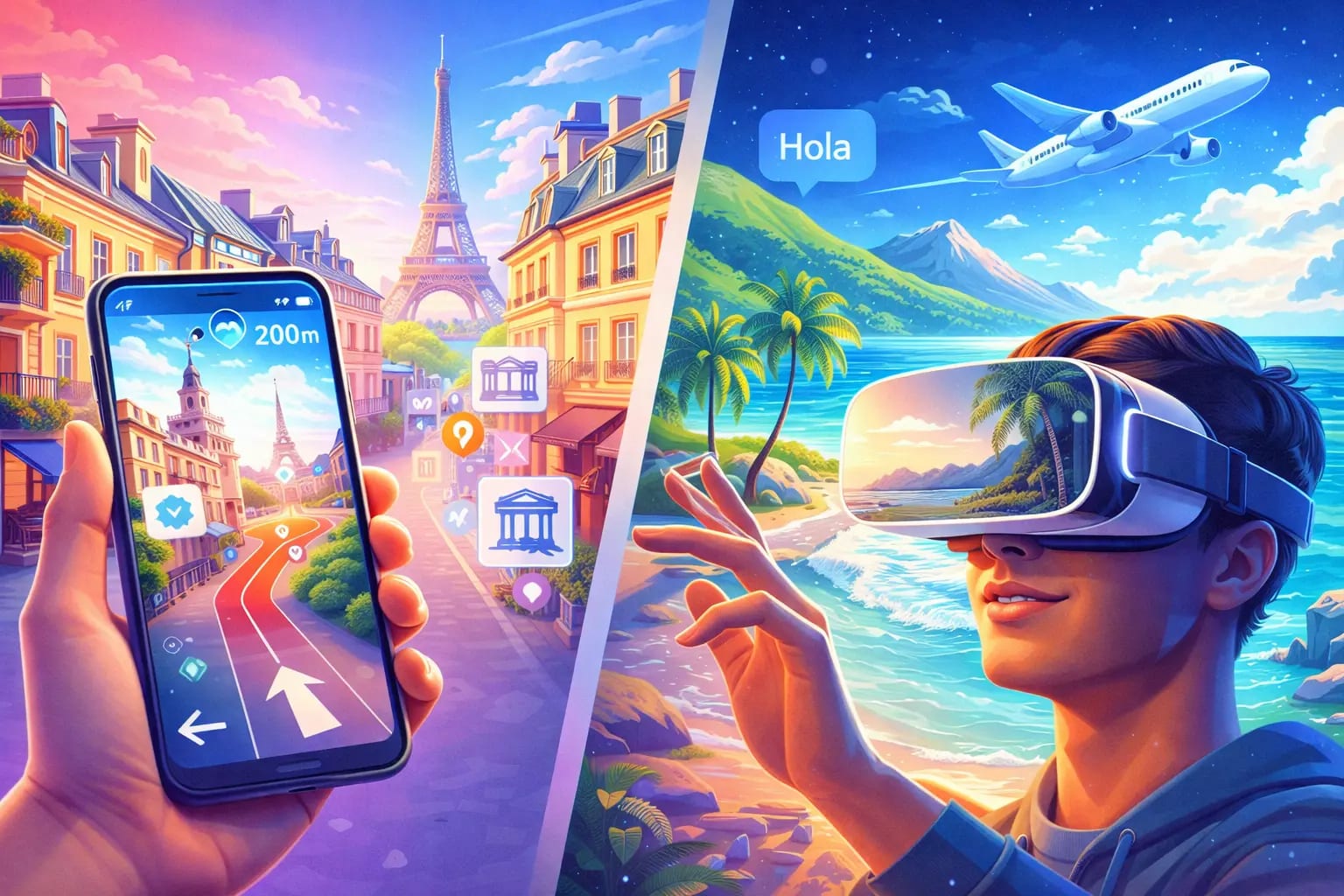
Introduction: The Rise of Immersive Travel Technology
The travel industry is no longer just about booking flights and hotels. In today’s digital era, travelers want experiences before, during, and even after their trips. This is where Augmented Reality (AR) and Virtual Reality (VR) are making a huge impact.
From previewing destinations to navigating foreign cities and exploring historical sites virtually, AR and VR are redefining how people travel. These immersive technologies allow travelers to interact with destinations in ways that were unimaginable just a few years ago.
For more innovation-driven insights, explore the
👉 Travel Category on ZaidApp: https://zaidapp.com/blog/category/travel
Understanding AR & VR: A Simple Explanation
What Is Augmented Reality (AR)?
Augmented Reality overlays digital information onto the real world using smartphones, tablets, or smart glasses.
Examples:
Live directions on your phone camera
Information overlays on monuments
Real-time translations via camera
What Is Virtual Reality (VR)?
Virtual Reality creates a fully digital environment that users can explore using VR headsets.
Examples:
Virtual city tours
Hotel walkthroughs
Simulated flight or cruise experiences
AR vs VR: Key Differences
Feature | AR | VR |
|---|---|---|
Environment | Real world + digital | Fully virtual |
Device | Smartphone / Glasses | VR headset |
Use Case | On-trip assistance | Pre-trip exploration |
Why the Travel Industry Is Adopting AR & VR
Changing Traveler Expectations
Modern travelers expect:
Personalization
Visual previews
Interactive planning
Tech-enabled convenience
Static images and text descriptions are no longer enough.
Competitive Advantage for Travel Brands
Travel companies using immersive tech:
Gain higher engagement
Increase bookings
Reduce cancellations
Build stronger brand trust
How AR Is Enhancing Real-World Travel Experiences
AR Navigation & Smart City Tours
AR-powered apps guide travelers by overlaying:
Directions
Nearby attractions
Restaurant recommendations
This is especially useful in unfamiliar cities.
AR in Museums & Historical Sites
Visitors can point their phone at:
Monuments to see historical reconstructions
Artworks to view interactive stories
Ruins to visualize ancient structures
This makes learning interactive and memorable.
AR Translation & Assistance
AR apps instantly translate:
Street signs
Menus
Instructions
Helping travelers overcome language barriers effortlessly.
How VR Is Transforming Travel Planning
Virtual Destination Previews
Travelers can explore:
Cities
Beaches
Tourist attractions
…before booking, reducing uncertainty and boosting confidence.
VR Hotel & Resort Tours
Hotels use VR to showcase:
Rooms
Amenities
Views
This transparency increases trust and conversion rates.
VR Flight & Cruise Experiences
Airlines and cruise companies use VR to:
Showcase cabin interiors
Demonstrate comfort and services
Leading to higher-value bookings.
AR & VR in Travel Marketing & Sales
Immersive Travel Advertising
Brands create:
360° destination videos
Interactive VR ads
AR filters on social media
These experiences are far more engaging than traditional ads.
Boosting Bookings With Virtual Experiences
Travelers who interact with VR content are:
More likely to book
Less likely to cancel
More satisfied overall
AR & VR in Airports and Transportation
VR Training for Airline Staff
Airlines use VR to train:
Cabin crew
Pilots
Ground staff
Improving safety and service quality.
AR Wayfinding in Airports
AR helps passengers navigate:
Terminals
Gates
Baggage claims
Reducing stress and missed flights.
Benefits of AR & VR for Travelers
Better Decision Making
Travelers see exactly what they’re booking.
Reduced Travel Anxiety
VR previews reduce fear of unknown places.
Accessibility
People with mobility issues can explore destinations virtually.
Benefits of AR & VR for Travel Businesses
Higher Engagement & Conversions
Immersive experiences keep users engaged longer.
Reduced Refunds & Complaints
Accurate previews prevent mismatched expectations.
Brand Differentiation
Early adopters stand out in a crowded market.
Real-World Examples of AR & VR in Travel
Marriott Hotels – VR room previews
Qantas – VR flight experiences
Tourism Australia – VR destination campaigns
Google AR Travel Tools – Location-based AR info
Challenges of AR & VR in Travel
Cost & Hardware
VR headsets and development can be expensive.
User Adoption
Not all travelers own AR/VR devices yet.
The Future of Immersive Travel
Metaverse Tourism
Virtual worlds will allow people to:
Attend virtual festivals
Explore digital cities
Experience destinations remotely
AI + AR/VR Integration
AI will personalize immersive travel experiences based on preferences.
Explore more emerging tech trends at
👉 Artificial Intelligence Category
Conclusion
AR and VR are revolutionizing the travel industry by making journeys more interactive, informative, and engaging. From planning trips to exploring destinations, immersive technology bridges the gap between imagination and reality.
As adoption grows, immersive travel experiences will become the new standard, not the exception.
Discover more travel innovation at
👉 ZaidApp Travel Blog



Comments
No comments yet. Be the first to comment!