Loading
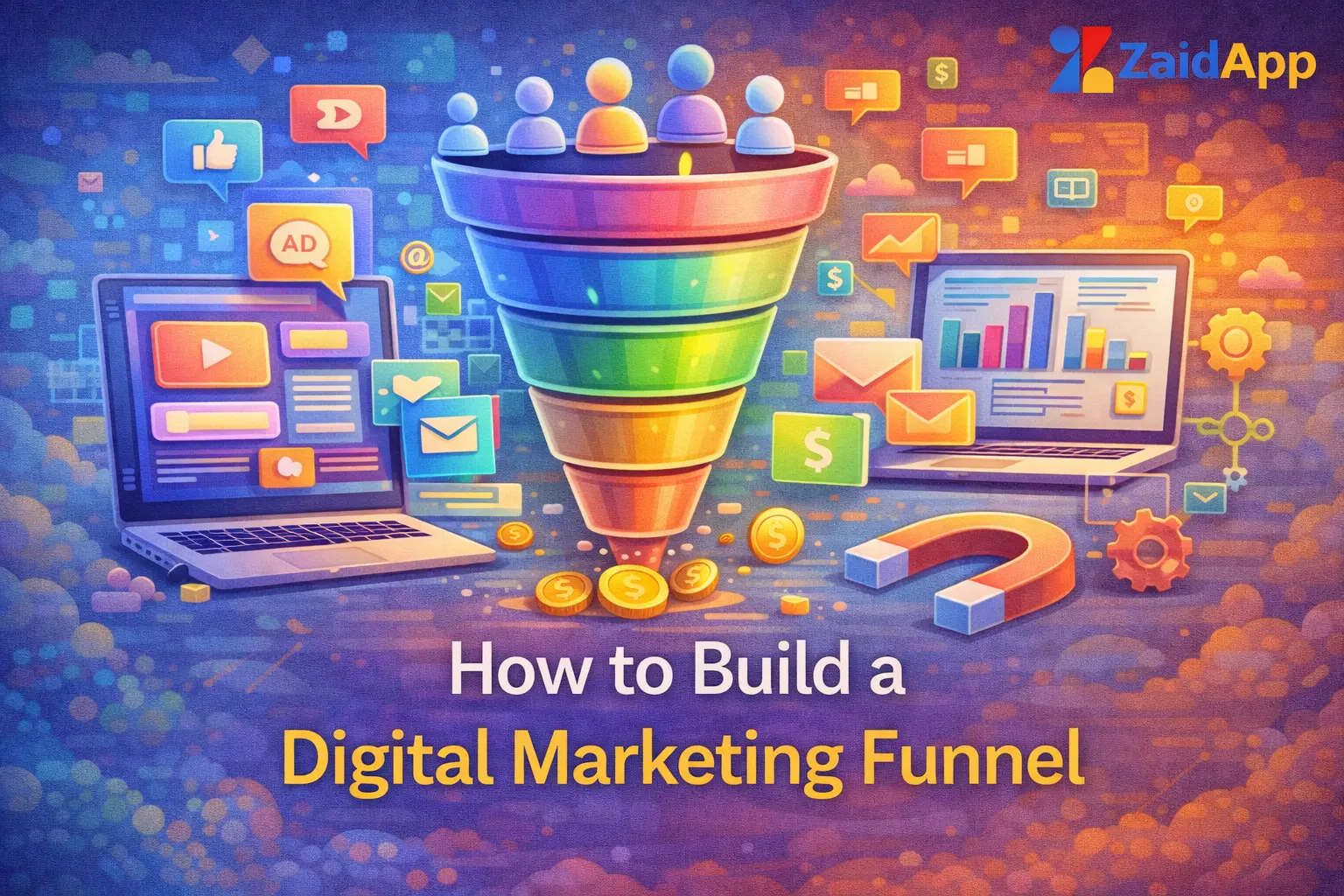
Attracting traffic is only the first step in digital marketing. The real challenge is turning visitors into leads and leads into paying customers. This is exactly where a digital marketing funnel plays a crucial role.
A digital marketing funnel guides users through a structured journey—from discovering your brand to becoming loyal customers. Without a funnel, businesses often lose potential customers due to poor targeting, weak follow-ups, or unclear messaging.
If you’re building a growth-focused strategy, understanding how funnels work is essential—especially when combined with modern digital marketing strategies designed for long-term success.
A digital marketing funnel is a step-by-step process that represents how people move from:
1️⃣ Awareness
2️⃣ Interest
3️⃣ Consideration
4️⃣ Conversion
5️⃣ Retention
Each stage uses different content and tactics to move users closer to taking action.
Think of it as a customer journey map, not a sales trick.
A well-built funnel helps businesses:
Attract the right audience
Build trust over time
Increase conversion rates
Reduce marketing waste
Improve customer experience
Funnels also align perfectly with how AI improves customer experience, by delivering the right message at the right time.
At this stage, people don’t know your brand yet. Your goal is visibility.
SEO-optimized blog content
Social media posts
Educational videos
Paid ads
Guest content
Content here should educate, not sell.
Examples:
Industry guides
How-to articles
Problem-solution content
This stage works best when combined with strong SEO basics for business owners, ensuring your content is discoverable.
Once users discover your brand, you must keep them interested.
Lead magnets (guides, checklists)
Email subscriptions
Webinars
Free tools or trials
Your focus here is value, not conversion.
Interest-based content pairs well with content marketing strategies that nurture curiosity and trust.
At this stage, users are evaluating options.
They ask:
Is this brand trustworthy?
Do they solve my problem?
Are they better than competitors?
Case studies
Testimonials
Comparison guides
Product demos
Email nurturing sequences
This stage aligns closely with customer experience optimization, where clarity and transparency matter most.
This is where users take action.
Clear call-to-action buttons
Optimized landing pages
Limited-time offers
Strong value propositions
Simple checkout or contact forms
Conversion success depends heavily on user experience and UI clarity, ensuring no friction during decision-making.
Most businesses focus only on conversion—but retention is where real growth happens.
Email follow-ups
Loyalty programs
Exclusive content
Customer support automation
Personalized recommendations
Retention improves lifetime value and reduces marketing costs. This is where AI automation tools play a powerful role in scaling engagement.
Before building a funnel, you must know:
Who your customers are
What problems they face
What solutions they seek
Clear audience research ensures funnel relevance.
Every stage needs different content.
Funnel Stage | Content Type |
|---|---|
Awareness | Blogs, videos |
Interest | Lead magnets |
Consideration | Case studies |
Conversion | Landing pages |
Retention | Emails, offers |
This structure prevents content confusion and improves flow.
Landing pages should:
Focus on one goal
Have clear messaging
Load fast
Be mobile-friendly
Performance optimization matters here, especially when aligned with website speed and Core Web Vitals improvements.
Automation ensures no lead is ignored.
Welcome emails
Lead nurturing sequences
Abandoned cart reminders
Feedback requests
Automation improves efficiency and consistency.
Measure funnel performance using:
Conversion rates
Click-through rates
Drop-off points
Customer lifetime value
Regular analysis helps refine your funnel and improve results.
This process is similar to running a structured SEO audit, where data drives improvement.
Trying to sell too early
Using the same message at every stage
Ignoring mobile users
Not following up with leads
Skipping retention strategies
Avoiding these mistakes leads to smoother funnels and better ROI.
Funnels are ideal for:
Service businesses
E-commerce stores
SaaS companies
Agencies
Coaches and consultants
Any business selling online benefits from a structured funnel.
A digital marketing funnel transforms random visitors into engaged customers by guiding them step by step. When built correctly, it improves conversions, strengthens trust, and creates predictable growth.
Businesses that understand and implement funnels gain a powerful advantage in today’s competitive digital landscape.
To strengthen your funnel strategy further, explore related insights in the Digital Marketing section of ZaidApp, where growth-focused tactics are explained clearly and practically.
 Previous Post
Learn how to rank your business locally with this complete local SEO guide. Improve Google visibility, traffic, and local leads.
 Next Post
Learn what managed hosting is and why it’s ideal for non-technical users. Discover benefits, features, and who should choose managed hosting.
No comments yet. Be the first to comment!